home

COMING SOON

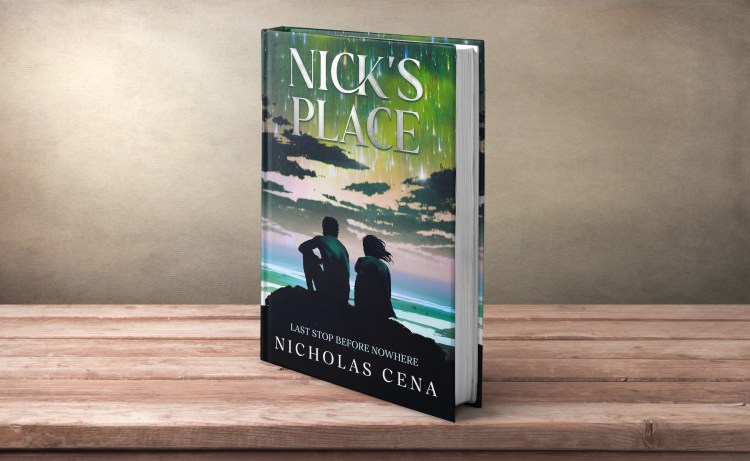
Nick’s Place: Last Stop Before Nowhere

This is a work of historical fiction. The manuscript is still in progress, and all details—including events, characters, and interpretations—remain subject to revision. To protect privacy and for creative purposes, most names have been changed.

Prologue

Everything that follows happened, give or take.

This is simply how it lives in me now, rebuilt from the wreckage: the warped Polaroids hidden in a shoebox beneath the bed, the scorched pages of a journal that survived the summer, the half-remembered words that still roll in like thunder from a storm long gone.

The demolitions in Pavones are real.

The rest is memory doing its unreliable work.

I changed most names to shield the guilty; I left a few untouched, because removing them would have felt like another kind of erasure.

I began writing this book following the devastating demolitions in Pavones, which included the destruction of my restaurant, Nick’s Place. It was the heart of our little town, that ramshackle restaurant where the televison played the same soccer games night after night, and where secrets were traded over warm beers like currency. One day it was there, creaking under the weight of a thousand stories; the next, it was rubble, bulldozed to make way for some developer’s vision of progress—a private resort maybe, or one of those soulless condo complexes that sprout up like weeds along the coast.

In the wake of the Pavones demolitions, the term “gentrification” murmured through conversations with increasing frequency. While shopping for groceries, I was often met with warm embraces from compassionate strangers and acquaintances, gestures of kindness I deeply appreciated. Yet, I was taken aback by the indifference of some I considered close, and the betrayal of certain “friends” who opposed us may have stung more painfully than the demolitions themselves.

To uncover more details or jog my memory, I spoke with Sylvia, to whom I dedicate this book, alongside all those displaced by the Pavones demolitions, the ADI, and everyone who offered support, including those who generously contributed to legal fees. I’ll delve into this in greater detail later.

Sylvia had relocated to the mountains, where she was warmly welcomed by the indigenous Guaymí tribe. During our conversation, she used the word “injustice” to describe the ordeal. Despite the hardship, Sylvia held onto hope that the demolitions would be reversed, that those responsible for the corruption would be held accountable, and that compensation would be provided. At the very least, she prayed the destruction would end with us, sparing the school, the church, and the rest of the town.

I had mentioned the aftermath of the demolitions, when la máquina sent a bewildered group to address the town. They stood there, asking how we were feeling, oblivious to the outrage simmering among us. The townspeople were furious, yet this particular group seemed unaware of the destruction they had driven past to attend the meeting.

“Shouldn’t that be the climax of the book?” I asked her.

She tilted her head, uncertain. “That’s your call,” she replied thoughtfully.

I wrote mostly at night, when the world felt asleep. My wife would catch me up late, hunched over a laptop that barely turned on, its fan wheezing like an old smoker, the screen flickering in protest.

“What are you writing?” she asked once, padding into the kitchen in her slippers, the clock ticking past 2 a.m.

“A book about what happened,” I replied, not looking up, my fingers stabbing at the keys like they owed me money.

“You’re writing about me? About us?” she pressed, leaning against the doorframe, her arms crossed in that way that meant she was half-amused, half-worried.

“Yes. Of course,” I said.

“Are you going to add how we first met? How we kissed on top of the mountain during the storm?” Her voice had that edge, the one that reminded me of the girl I’d fallen for all those years ago, fierce and adamant.

“It’s what the entire book is about, actually,” I said, finally glancing her way with a grin I hoped looked reassuring.

She poured herself a glass of water and sat across from me, watching the cursor blink on the screen like it was mocking us both.

“Don’t worry, I’ll never finish it,” I assured her. “I already deleted over 200,000 words. They were garbage anyway—too raw, too scattered. Like trying to rebuild a house from splinters.”

She had told me, more than once, that nobody would care about the demolitions besides us. Besides surfers looking for the perfect wave, nobody even knew about our small town of Pavones, tucked away on the edge of nowhere, inhabited by maybe 800 souls if you counted the stray dogs and the ghosts of old fishermen. Most days, it felt like far less, especially after developers caught wind that Pavones boasted “the second longest wave in the world.” They descended with their surveys and hollow promises of jobs that never came to fruition.

Why waste my time writing about something nobody cared about? A forgotten corner of the world being paved over for progress that benefited no one we knew. She was right, in a way. The world was full of bigger tragedies—wars, pandemics, cities crumbling under their own weight. Who would pick up a book about a restaurant getting knocked down in a place that barely registered on a map?

At first, I felt adrift, staring at my laptop screen deep into the night, its blue glow casting a ghostly tint across my face. I’d write a sentence, only to delete it, chasing memories that dissolved like smoke. How could I capture the essence of Nick’s Place, the ineffable warmth of its soul? How could I convey that it was more than a restaurant, but a sanctuary shaped by the heart of Pavones’ people? When its existence hung in the balance, the community rose, unwavering and united, forming a living shield, standing shoulder to shoulder with fierce resolve to protect what we had built together.

I thought about calling old friends, the ones who’d scattered like leaves after the changes hit, some to the city. One of them, Mary (that’s not her real name), had laughed when I mentioned the book over the phone.

“You’re still hung up on that? Let it go, man. Pavones is gone. Move on.”

But the thing is, you don’t move on from a place that shaped you, even if it’s small, even if the world doesn’t notice its absence. The demolitions weren’t just about buildings; they were about lives uprooted, histories buried under concrete. My wife was wrong about one thing: people might care if they knew. So I kept writing, patching together the fragments, because someone had to remember. And so, this is the book. It starts like this: There is a town called Pavones, and it’s in the process of vanishing, piece by piece. Listen.


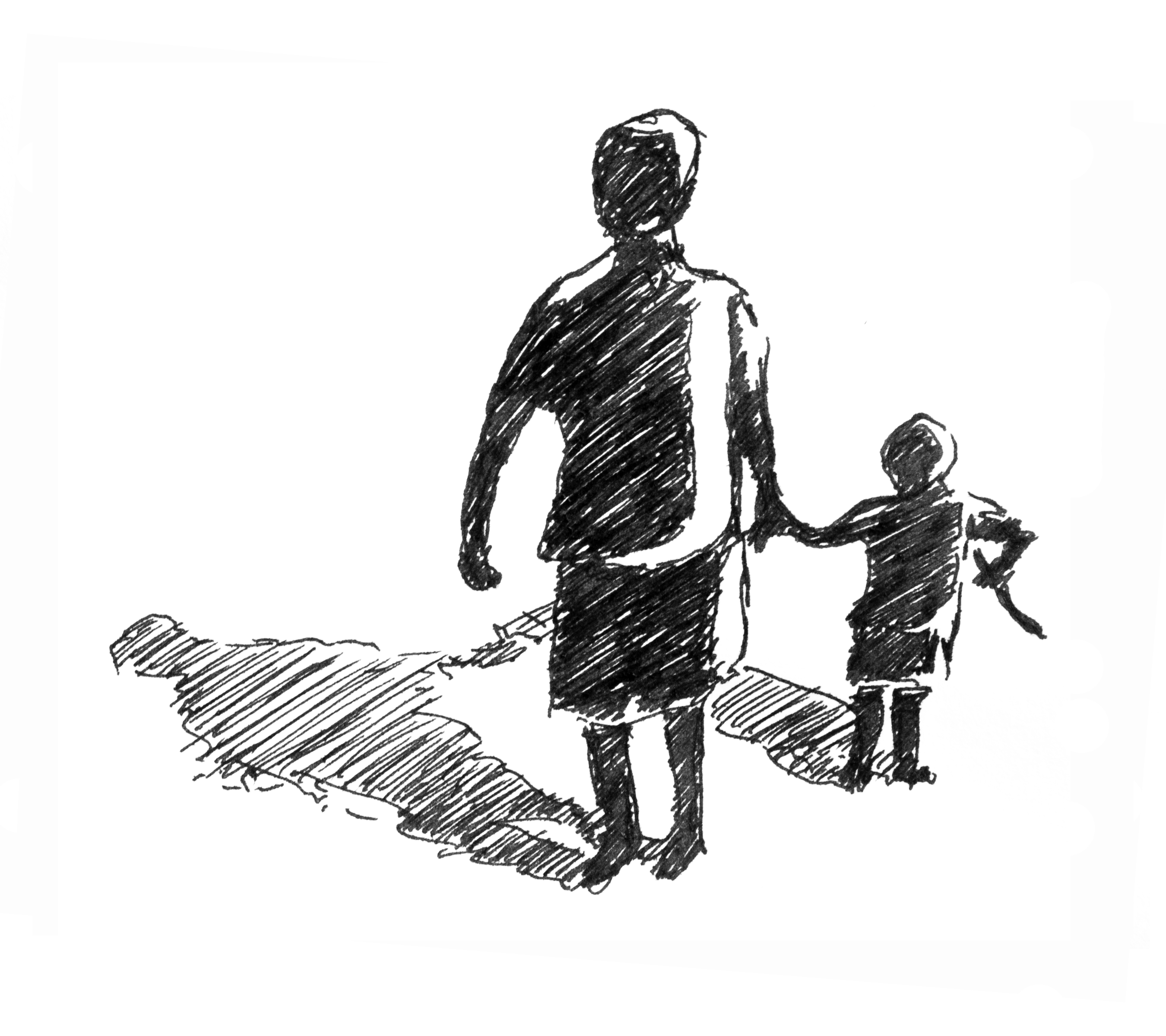
The illustrations—hand-drawn sketches woven throughout the pages—are the work of Arsen Art Studio.